
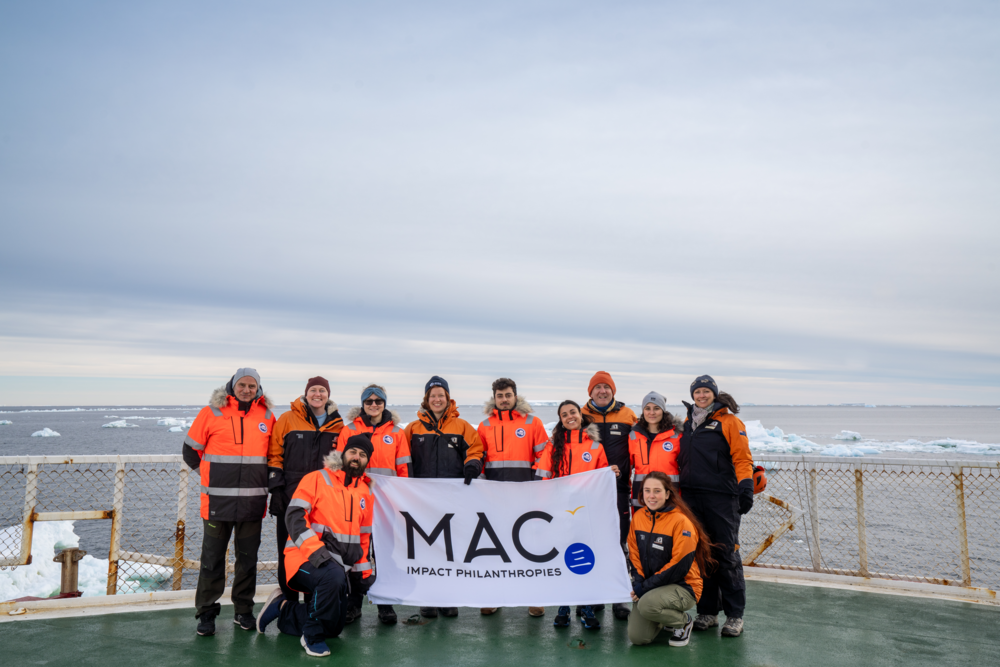
This past year, a group of MAC³ early-career researcher fellows (ECRs), including myself, had the unique opportunity to join the 2024 voyage of the RV Laura Bassi to explore the Ross Sea. For many of us it was our first polar expedition. Over two months, we navigated not only icy waters but also the challenges of being an ECR in today’s academic world. We got together and shared our experiences in a paper which has just been published in the ICES Journal of Marine Science.
Read the full article: https://academic.oup.com/icesjms/article/82/7/fsaf099/8191730?login=true
Key insights from the paper include:
🌊 Ross Sea complexity and connectivity: The Ross Sea ecosystem is shaped by interconnected physical, chemical, and biological processes. From haloclines affecting nutrient distribution to the formation of Antarctic Bottom Water and seasonal phytoplankton blooms, understanding these interactions requires integrated, multidisciplinary observations. Traditional isolated measurements miss the broader picture, while collocated, multi-team sampling, like that on the 2024 RV Laura Bassi expedition provides a more holistic understanding.

👩🔬 Early-Career Researcher perspectives: ECRs bring innovative, interdisciplinary approaches to complex questions. However, challenges such as short-term contracts, financial instability, and frequent relocations impact career sustainability. Many ECRs reported taking less research-intensive roles to maintain stability, highlighting the need for long-term support.
🌐 International and multidisciplinary collaboration: Collaborative efforts between Italy and New Zealand, as well as the broader global network, demonstrated the value of sharing expertise, resources, and data. ECRs emphasized that informal interactions on expeditions can spark new research ideas and foster lasting professional networks.
⚖️ Gender diversity and inclusivity: The expedition included 19 female scientists out of 45 participants, illustrating how diversity enriches perspectives and scientific approaches. ECRs stressed the need for continued progress in making fieldwork more inclusive, especially for women and underrepresented groups.
📡 Future observational needs: The paper identifies critical strategies for advancing Ross Sea research:
- Long-term, year-round monitoring using ships, moorings, autonomous vehicles, and uncrewed aerial systems
- FAIR data principles to ensure findable, accessible, interoperable, and reusable datasets
- Integrated measurements collocated in time and space to capture physical, chemical, and biological interactions
- Sustainable fieldwork practices, including reducing carbon footprint, optimizing ship operations, and increasing instrument reuse
🤝 Recommendations for supporting ECRs and research sustainability:
- Provide longer contracts and fair wages to reduce career uncertainty
- Include ECRs in project planning, data analysis, and authorship
- Strengthen multidisciplinary and international networks
- Increase long-term funding for ocean observation and climate research
- Promote mental health, safety, and inclusive working conditions during fieldwork
- Enhance public engagement and science communication
The paper concludes that ECRs are uniquely positioned to drive innovation in polar research, embracing FAIR data practices, environmentally sustainable methodologies, and cross-disciplinary collaboration. By investing in the next generation of scientists, the research community can ensure more holistic understanding and effective management of polar ecosystems in the face of climate change.

 Alina Madita Wieczorek